

Micro:bit
Micro:bit
The BBC micro:bit is an award-winning programmable device that allows students to get hands-on with coding and digital making in a fun and accessible way.

STEM (Science, Technology, Engineering)
Literacy (Reading & Writing)
21st century skills (e.g. critical thinking, collaboration, creativity, digital skills)
Last updated: November 19, 2024
Through the micro:bit children are encouraged to learn computing concepts and computational thinking using real code and the physical micro:bit that allows them to take abstract subject matter off the screen and into the real world. The device provides an authentic experience of the interaction between hardware and software and gives children a tool to apply practical uses of tech to their science, technology, engineering, musical, sports and art and design interests.
Widely adopted in 60 countries
13 languages
Target audience: Educators and teachers
Grade: Primary Education, Lower Secondary Education, Upper Secondary Education
Works offline but connectivity for updates required
The information presented is provided by the company, and reviewed in good faith. Learning Cabinet is not responsible for inaccurate content.
How this product was evaluated?The Micro:bit's approach is grounded in constructivist learning theory, which posits that students build knowledge actively through hands-on experiences. By experimenting with code and creating projects, students construct understanding through trial, error, and iteration. This "tinkering" process aligns with constructivist principles, fostering skills like problem-solving, collaboration, and creativity, essential for 21st-century learning.
Micro:bit has external evaluation with transparent methods.
Different levels of research evidence indicate the reliability of the proof of positive impact. The tools featured in the Learning Cabinet range from:
The study found that 80% of students felt anyone could learn programming, 90% of teachers would reuse it, and 85% support it as a national programming tool, highlighting its positive impact on confidence and 21st-century skills.
Microbit found to be enjoyable and useful by pupils, enhancing programming and problem-solving skills. It also fostered teamwork to overcome challenges. Their engagement with programming grew, along with a heightened interest in STEM subjects.
Recommended use
The BBC Micro:bit is intended to support various lessons and outputs. The lesson plans and support materials are flexible if you have one hour to try out an activity, or embed this into curriculum across activities and lessons.
Target audience
Through the micro:bit children are encouraged to learn computing concepts and computational thinking using real code and the physical micro:bit that allows them to take abstract subject matter off the screen and into the real world. The device provides an authentic experience of the interaction between hardware and software and gives children a tool to apply practical uses of tech to their science, technology, engineering, musical, sports and art and design interests.
Lessons are designed to align with international curriculum, with clear learning progression. Lessons are designed to allow teachers to integrate into various aspects of their curriculum and targeted at students aged 7-11, 11-14 and 14-16 years old.
The Microbit is a small computer that enables hands-on coding, fostering creativity and active learning through a constructivist approach. It teaches computational thinking via practical projects that solve real-world issues, entertain, or promote well-being. Designed for simplicity, the Microbit is widely used globally to teach computing concepts, broadening student engagement and motivation in computational learning.
The BBC Micro:bit is intended to be a stable device for use in the classroom, we aim to keep prices as low as possible whilst providing the best learning experience. The device is not updated frequently (in terms of the hardware) to allow teachers to use the device in the long term. All content is currently free at the point of access.
No, we would aim to make the device and content accessible to all.
It may be helpful to see impact projects here https://microbit.org/impact/case-studies/ In 2023 we began delivering "the next gen" a project to support access to micro:bits to all primary schools in the UK. Over 21000 primary schools in the UK (90% of primary schools) joined the programme and are working on getting started activities, learning machine learning projects and incorporating micro:bit into their curriculum.

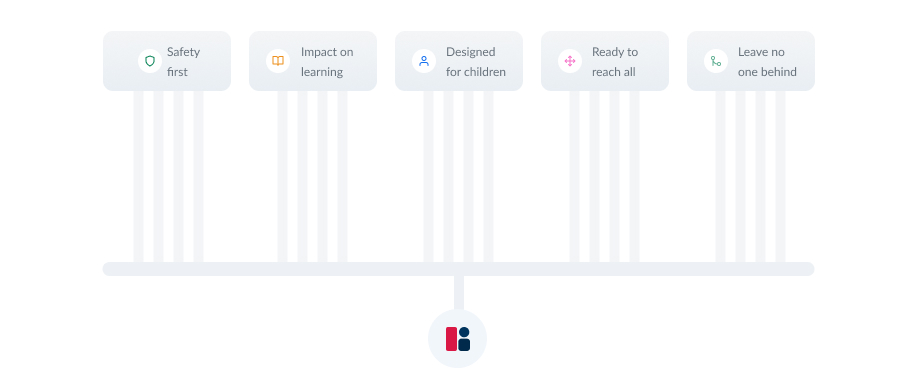
Evaluated using the Learning Cabinet’s rigorous EdTech for Good Framework to ensure safety, learning impact, scalability, and inclusion for all learners.
Micro:bit has been evaluated by the Learning Cabinet expert team using the EdTech for Good Framework.

The BBC micro:bit is an award-winning programmable device that allows students to get hands-on with coding and digital making in a fun and accessible way.
Read Along is a reading app that helps young learners have fun while they learn to read. Read Along has an in-app reading buddy that supports learners as they read aloud, offering assistance when they struggle, plus rewards them with stars when they do well – guiding them along as they progress.