Mathematics

Mathmaker logo

Math Makers

Math Makers: Empowering kids to learn math through play!

Overview

Last updated on:December 16, 2024
Info icon
Mesh
Grade
Early Childhood Education
+2
Connectivity
Full offline functionality
Technologies
Smartphone, Tablet
Support
Email, Phone/Call
Customisation
Course Content
Active users
5k
Website
ululab.com
10

Countries

Info icon
4.00USD/user/year

Base Price

16

Languages

Info icon
Evidence ActiveEvidence ActiveEvidence Active

Evidence

Thumb Nature 1
Thumb Nature 2
Thumb Nature 3
Thumb Video 4
Wave dividerWave dividerWave dividerWave divider

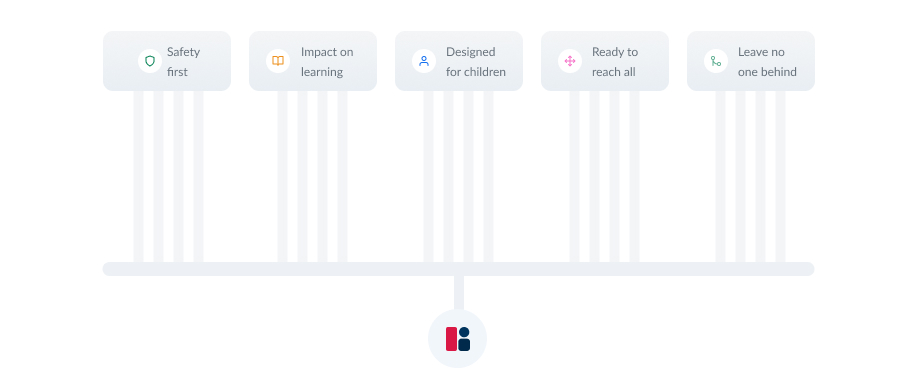
Safety First

Privacy icon

Privacy

  • Privacy Policy icon
    Privacy PolicyOpen info in a new page
  • Terms of Service icon
    Terms of ServiceOpen info in a new page
  • Product alerts users of significant changes to the privacy policy icon
    Product alerts users of significant changes to the privacy policy
Data Sharing icon

Data Sharing

  • Product shares data with third parties icon
    Product shares data with third parties
    Info icon
  • Has data sharing agreements with these third parties icon
    Has data sharing agreements with these third parties
  • Product shows external advertisements. icon
    Product shows external advertisements.
    Info icon
Data Origin icon

Data Origin

  • Product does not utilize AI icon
    Product does not utilize AI
  • AI has not been trained using product datasets icon
    AI has not been trained using product datasets
Wave dividerWave dividerWave dividerWave divider

Impact on learning

Theory

The product uses theories of constructivist learning, particularly Piaget's model, guiding students from intuitive to formal understanding of fractions. This is achieved through progressively complex tasks that emphasize visual representations and manipulatives before introducing symbolic notation. Impact is measured using pre- and post-tests, demonstrating substantial learning gains through gameplay alone and a positive transfer to abstract understanding​.

Icon representing impact level 1
Impact Level 3/3
  • Green check icon indicating success

    Data shows a positive change towards learning outcomes.

  • Green check icon indicating success

    There is causality between this product and a positive impact on improved learning outcomes (e.g., a control or comparison group).

  • Green check icon indicating success

    There are one or more independent evaluations that confirm these conclusions.

Evidence
External Evidence
Pre-Post Study

Learning Outcomes: Two university studies showed significant improvements (10.5% & 32.6%) on fractions after playing Math Makers. A standard international test (TIMMS) was used and showed that only a few hours of playing were required.

Read more
Upward arrow icon
External evaluations and certifications
Icon representing engagement statistics
This product has also been evaluated or listed in the following EdTech discovery platforms.
kidSAFE® Seal Program
kidSAFE® Seal ProgramOpenRight red
Gee Learning Games Award
Math Makers - Gee Learning Games Award Winner 2022OpenRight red
Engagement
Icon representing engagement statistics

Recommended use

Early Childhood Education
+2

Frequency: Several times per week Individual or group: Can be used individually or in groups Duration: Each session can vary depending on the child's engagement, average session time is around 30 minutes. Studies suggest a total of 3 hours can lead to significant improvement.


Frequency: Several times per week Individual or group: Can be used individually or in groups Duration: Each session can vary depending on the child's engagement, average session time is around 30 minutes. Studies suggest a total of 3 hours can lead to significant improvement.

Students

Target audience

54%
User growth rate
5k
Monthly Active Users
Info icon
10
Countries
Info icon
Icon representing engagement statistics
Wave dividerWave dividerWave dividerWave divider

Designed For Children

Learning Objectives

What is the learning objective of Math Makers?

Math Makers is a game based learning math app that builds conceptual understanding for the most critical primary school subjects, by combining visual math manipulatives and physics-based puzzles.

lock privacy

Curriculum

  • Success icon 1
    National curriculum
  • Success icon 2
    Adaptable to different curriculums

Information about curriculum

Math Makers' curriculum design and approach are rooted in the principles of game-based learning and cognitive conflict. The game focuses on core mathematical concepts, such as fractions, place value, and numeracy, and is designed to address the conceptual gaps that students often encounter. Here are some key aspects of Math Makers' curriculum: Visual Representation: The game uses visual representations to make mathematical concepts more concrete and understandable. For example, fractions are taught using an area model, and multiplication is represented both as repeated additions and using a different area model. Active Learning: Math Makers emphasizes active learning through interactive puzzles and challenges. Students are encouraged to experiment, explore, and discover mathematical relationships on their own. Cognitive Conflict: The game uses cognitive conflict to help students confront and overcome misconceptions. By presenting situations that challenge their existing understanding, students are prompted to rethink and refine their mathematical thinking. Curriculum Alignment: The curriculum is aligned with international math standards, ensuring that students are learning essential mathematical skills. The main curriculum that was followed when designing the game is the Common Core (USA). Most levels in the game specifically target an item from the curriculum.

Pedagogical design

Accordion toggle
Overview
Math Makers’ design is based on Game-Based Learning and Constructivism. Many apps engage kids through games but often make math a barrier, leading to frustration and extrinsic motivation. In contrast, Math Makers integrates math concepts into gameplay, enhancing engagement and improving attitudes toward math. It also promotes Constructivism by allowing students to explore and create their own understanding, fostering a deeper learning experience.
Accordion toggle
Additional Details
Flexibility
The product allows learner agency (e.g. it provides flexibility for the learner or teacher to make choices, take actions, or influence their learning outcomes and experiences).
Learner engagement
The product has elements that raises the level of affection in learner (e.g. pedagogically meaningful narrative, characters, etc.).
The product has interactive design where a learner can interact with the content via different actions, like for example solving problems.
Creativity
The product allows content creation
The product includes problem-solving activities

User Experience

Accordion toggle
User interface
While we collect quantitative usage data in our app, it often doesn’t explain the reason behind certain behaviors. To better understand UX or UI issues, we frequently conduct playtests, remotely during the summer, and in schools the rest of the year. The school playtests are especially useful to spot usability issues that could impact some users, as we get to see several groups of diverse students in a few hours. We have been doing these playtests continuously for the past 10 years. A recent UX improvement relates to the Creative Mode, where we noticed that students struggled manipulating objects to get them to be precisely where they want. Amongst other small improvements, we introduced a grid on which all objects snap, making it easier for them to be aligned with each other. Subsequent playtests revealed that object placement was much easier. The surprise was that the removed friction also allowed students to create much more complex and mathematical puzzles that they were not able to create in previous versions. Most UX changes are small but have a big impact. Examples of small changes in our latest version: change the default layout of a chain when placed in a level, limiting the allowed angles when rotating an object, allowing kids to perform actions like items deletion the way they were instinctively doing, etc.
Open Product Screenshots
Accordion toggle
Data-driven product development
We go into playtests with a specific set of design questions we need to validate. These questions tend to focus around new features we’re developing. The content students are playing during the playtest is designed to answer our design questions by just watching them play, without having to intervene at all. We encourage students to speak about issues, but very rarely give them answers as we want to see how and if they figure things out autonomously. When we’re not able to determine the longer term impact of a feature through playtests, we rely on AB tests within the app itself to measure its impact on metrics like retention and engagement. For example, we were able to determine that taking players out of the puzzle experience at a certain frequency to see their progress led to shorter sessions and less levels completed. Over the past years, we performed hundreds of these AB tests in all areas of the app to guide its design. We meet weekly to discuss learned lessons and to design the upcoming AB tests.
Accordion toggle
Geographic focus
While the approach was developed based on the Common Core curriculum (USA), we also looked at other curriculums to design an approach that could impact most of them. Our app is being used worldwide - while the majority of our users are in Canada / USA, Japan and China are also in our top performing 5 countries, which shows the versatility of the approach.
Accordion toggle
Ensuring content quality
Expert Review: Content is reviewed by subject matter experts.
Educational Standards Alignment: Content aligns with educational standards.
User Feedback Incorporation: Regular updates are informed by user feedback.
Evidence-Based Content: Content creation is based on current educational research.
Quality Assurance Processes: Implementation of rigorous quality control measures.
Editorial Oversight: Editorial teams oversee content development and accuracy.
Wave dividerWave dividerWave dividerWave divider

Ready to Reach All

Infrastructure

  • Device compatibility
    Smartphone, Tablet, Desktop/Laptop, Chromebooks
  • Designed for low-cost devices
    Yes
    Info icon
  • Environment
    Web-Based (Accessible via a web browser without requiring installation on a device), Device Installable (Requires installation on a device to be used, i.e. a mobile or desktop app)
  • Offline availability
    Full offline functionality
  • Integration with 3rd party
    Education/Learning Data tools, Single Sign-On or other secure login tools, User data/metrics platforms, LMS platforms

Support

  • Training materials
    User manuals
  • Training material languages
    EnglishFrench,
  • Training material target users
    Educators and teachers
  • Technical support

    Image for Technical support 1
    Email Support

    Image for Technical support 3
    Phone/Call Support

Local Adaptability

  • Curriculum / educational content can be customized
    Yes
    Info icon
  • Visual / audiovisual content can be customized
    No
  • Content can be customized
    Yes
    Info icon
  • Current languages
    Chinese Traditional, Danish, English, French, German, Italian, Japanese, Japanese, Korean, Norwegian, Portuguese, Russian, Simplified Chinese, Spanish, Swedish, Turkish
  • Possibility to translate the product to new language
    Yes
    Info icon
  • Current writing systems
    Indic Scripts
  • Licensing information
    • The solution is proprietary

Data import/export

  • Export data capability
  • Exportable data types
  • Import data capability
  • Automation
Affordability

Affordability Card

Background pattern representing engagement statistics
Business model icon
Business model
Business-to-Consumer
Business-to-Government
Pricing model icon
Pricing model
Subscription
Pricing tiers icon
Pricing tiers
Per student pricing
Background pattern representing engagement statistics
lock privacy

4 USD/year

Starting price

  • Success icon 1
    Flexible pricing available
Ask for details

Pricing Strategy

We aim to sustain our operations and the cost of creating high quality content by generating revenue from yearly and monthly subscriptions sales to parents. Since the subscription is hard to afford for less fortunate families, we also provide the app for free to teachers. We also work with libraries in the Quebec province to distribute an online version of the app to anyone with a library card, for a low cost distribution license fee billed directly to libraries. Finally, we’ve partnered with several associations in the past to provide our app in low income countries. Our apps were included in tablets reaching up to 100,000 children through the Breteau Foundation in the past 10 years. We are also starting a partnership with Teach the World, and the aim is to scale from a few thousands to eventually reach 100,000 in Pakistan in the next two years. Working with UNICEF for this initiative would increase our odds of success drastically.

Organisation and Operations

Organization Details

DEVELOPED IN
Canada
Type of organization
Business enterprise
Stage of organization
Growth Phase
(since 2011)
Number of employees
5-10
FINANCIALS
Dealroom,
Open information icon
DEVELOPED IN
Canada
Type of organization
Business enterprise
Stage of organization
Growth Phase
(since 2011)
Number of employees
5-10
FINANCIALS
Dealroom,
Open information icon
DEVELOPED IN
Canada
Type of organization
Business enterprise
Stage of organization
Growth Phase
(since 2011)
Number of employees
5-10
FINANCIALS
Dealroom,
Open information icon
lock privacy

Experience with large projects

  • Success icon 1
    Local government projects
  • Success icon 2
    Partnership models with national institutions
Case Study Link
Upward arrow icon indicating more information

Large implementation example

Our company has existed in the educational space for over 12 years, has successfully reached hundreds of thousands through its educational apps, and is well positioned / connected to introduce an impactful new educational approach. The team was relatively small (3 people) up until 2019. We then received around 3m USD in funding from several sources to expand our educational approach to multiple subjects with Math Makers. Our current team of 6 people is now focused on growth and increasing adoption. We think the current product can have a big impact worldwide, especially in low income countries. Previous collaborations reached 100,000 students this way, but everything is now in place to scale this much further.

Wave dividerWave dividerWave dividerWave divider

Leave No One Behind

accessibility icon

Accessibility of Design

Success iconMath Makers does not fulfil the WCAG 2.1 level AA requirements

Equity of access & Gender

Accordion toggle
Product usage between genders
Stress-Free Environment: we noticed in our playtests that games involving limited time challenges can stress some students, especially girls, preventing them from learning from their experience. All our content therefore can be completed one step at a time, without requiring any time sensitive actions.
Accordion toggle
Catering to the needs of marginalized or disadvantaged child groups
Math is the language, not English: studies have shown a strong link between literacy and mathematics. This means that students who struggle with language will also struggle in mathematics, even if the mathematical concepts themselves could be readily understood by them. Most apps rely on language to discuss math principles, which means that students with literacy issues will also struggle in these apps. Our app doesn’t have any text in its gameplay. This is good for two reasons: first, it removes all barriers associated with language difficulties. Second, it forces our team to communicate complex mathematical problems through visual representations and visual aids, which is an approach researchers find works really well to teach difficult subjects in mathematics. Additionally, since the app is entirely visual, there is no need for verbal instruction. This means that students that are either deaf or hard of hearing will not miss on crucial instructions.
Accordion toggle
Principles of inclusion and equity
A gentler introduction to mathematics: our app leverages the familiarity and interest that kids have with video games to make learning engaging and effective. Unlike traditional school materials, which can often be intimidating for children due to their rigid nature, educational games provide a more familiar, enjoyable and interactive approach. By embedding mathematical concepts within fun gameplay, Math Makers helps children learn without feeling like they are studying, thereby reducing anxiety and fostering a positive attitude towards education. This impact has been studied by McGill, showing that the app has the potential to lower barriers to learning. Furthermore, this approach builds interest for girls and other groups that traditionally show less interest in math and STEM, making the subject more inclusive and appealing. The points listed in previous questions help with inclusion and equity as well.
Accordion toggle
This product promotes AI equity
N/A - students can’t access an AI through our app.
Wave dividerWave dividerWave dividerWave divider

Get in touch with the organization

Contact Person Logo
Francois Boucher-Genesse

Contact the company get more information on pricing, schedule a demo or if you any other inquiry.